

A Podcast about Cinema and Cinephiles from Peter Labuza, 2012-2020
Showing posts with label orphan films. Show all posts
Showing posts with label orphan films. Show all posts
Tuesday, January 19, 2021
Framing Media #8 - Jennifer Peterson on Government Sponsored Environmental Awareness Films

Wednesday, April 29, 2020
Episode #123 - James Leo Cahill (Pom Poko)

"If we’re to think of film philosophy or critic theory, cinema does in fact have a role in the upheaval of thought in the way the medium itself can do a kind of radical critique of presuppositions.”
As a constant Instagram user, I find it hard not to love the numerous videos of mammals and other species in behavior whose response always comes down to "they're just like us!" But what about that history of cinema that shows us how animals are not like us, and perhaps encourages us to think outside our own worldview. In Zoological Surrealism, University of Toronto professor James Leo Cahill explores the wondrously strange history of filmmaker Jean Painlevé, best known for his documentary The Seahorse, and explores the numerous scientific films and how he and his collaborators essentially embraced a different worldview by merging art and science. In this long ranging history, James takes us through his first fascinations with cinema and animals as well as through the numerous unique theories he develops through tracing a transhistorical understanding of Painlevé. Finally, the two embrace every emotion through examining Pom Poko, a curious anime from Studio Ghibli that traces the last years of a dying species and celebrates the way we feel loss....a film quite appropriate for our current moment.
0:00–7:10 Opening
7:54-13:05 MUBI Sponsorship
13:50–1:32:30 Deep Focus — James Leo Cahill
1:34:35–1:37:35 OVID.TV Sponsorship Section
1:38:21–1:54:08 Double Exposure — Pom Poko (Isao Takahata)
1:54:56–1:56:51 Close
7:54-13:05 MUBI Sponsorship
13:50–1:32:30 Deep Focus — James Leo Cahill
1:34:35–1:37:35 OVID.TV Sponsorship Section
1:38:21–1:54:08 Double Exposure — Pom Poko (Isao Takahata)
1:54:56–1:56:51 Close
Wednesday, March 18, 2020
Episode #121 - Jon Dieringer (Made in Hollywood)

"I just hope there's always going to be a healthy alternative."
The podcast returns in our perilous times with a profile of the website all about what's playing in repertory and experimental cinemas across New York. And though the balconies remained closed and the popcorn machines without an ounce, there are plenty of reason to subscribe to Screen Slate and listen to this conversation with Jon Dieringer. Jon takes us to his early programming days and work on a few Hollywood movies before diving into the complex work preserving the history of experimental video at Electronic Arts Intermix. He then talks about the origins of Screen Slate (including its infamous and now defunct competitor) and how it continues to push the boundaries of what curious cinephiles can and should watch. Finally, the two dive into the absolute oddity that is Made in Hollywood, a proto-Lynch take on the industry from Bruce and Norman Yonemoto with Patricia Arquette that is both highly artificial and highly bizarre.
0:00–6:18 Opening
7:27-10:43 OVID.TV Sponsorship
11:28–1:20:21 Deep Focus — Jon Dieringer
1:21:32–1:24:57 MUBI Sponsorship Section
1:25:37–1:40:32 Double Exposure — Made in Hollywood (Bruce and Norman Yonemoto)
1:40:36–1:42:33 Close // Outtake
7:27-10:43 OVID.TV Sponsorship
11:28–1:20:21 Deep Focus — Jon Dieringer
1:21:32–1:24:57 MUBI Sponsorship Section
1:25:37–1:40:32 Double Exposure — Made in Hollywood (Bruce and Norman Yonemoto)
1:40:36–1:42:33 Close // Outtake
Sunday, January 20, 2019
2018 Countdown With Keith Uhlich (Part 2)

It's easy to claim art serves a purpose, but what exactly is that purpose? How do artists and critics reckon with the images, ideas, and worlds they've created—for better and worse? If art only builds a monument to itself, what value does that hold? In the second part of Peter and Keith Uhlich's look back at the year 2018 in movies, these questions come to the forefront. It's not just what art is but how it strikes us, how it is purposed (or repurposed), and how it becomes part of a dialogue. Though covering just one year of cinema, a list that expands back over a century. The big surprise: who topped their list with film and who topped it with television? Surprises abound in this invigorating discussion.
0:00–2:41 Opening
2:41–26:34 Picks for #5
26:34–41:40 Picks for #4
41:40–1:00:41 Picks for #3
1:01:20–1:03:59 Sponsorship Section
1:04:47–1:27:08 Picks for #2
1:27:08–1:30:02 Guest Picks
1:30:02–1:59:56 Picks for #1
1:59:56–2:04:39 Wrap Up
2:05:36–2:08:35 Close / Outtake
2:41–26:34 Picks for #5
26:34–41:40 Picks for #4
41:40–1:00:41 Picks for #3
1:01:20–1:03:59 Sponsorship Section
1:04:47–1:27:08 Picks for #2
1:27:08–1:30:02 Guest Picks
1:30:02–1:59:56 Picks for #1
1:59:56–2:04:39 Wrap Up
2:05:36–2:08:35 Close / Outtake
Sunday, April 22, 2018
Episode #100 - Peter Labuza (The Long Gray Line)
"Cinephilia is always bigger than yourself."
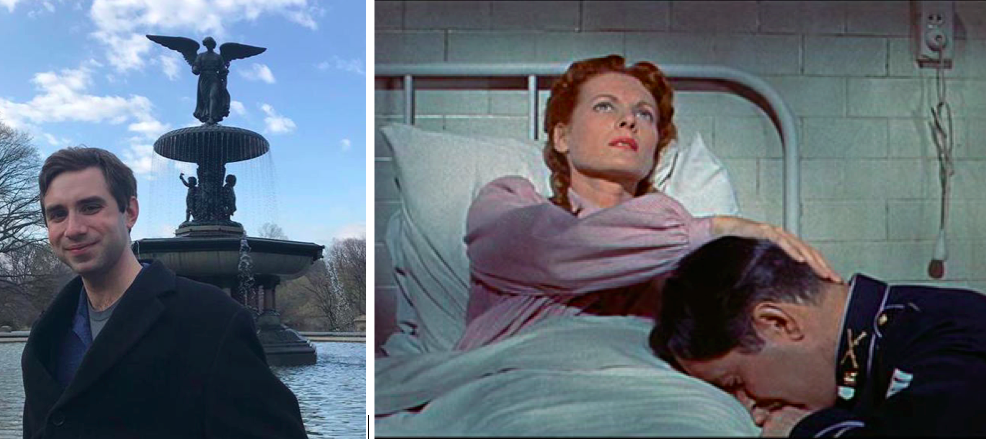
Every guest of The Cinephiliacs has had their chance in the hot seat to be questioned by Peter on a myriad of topics, but never the other way around. In this very special 100th episode, it is the guests who have control of the mic. Friend of the show Keith Uhlich plays host for an episode to ask Peter about his first cinematic memory, how the podcast got started, and why he turned to film history. Along the way, many other former friends call in to ask their own questions about his favorite theaters, the films he just doesn't understand, and the lessons he's learned through the course of the show. Finally, Peter finally chooses the film and goes with John Ford's enigmatic biopic The Long Gray Line, a story of the military and America in a way that neither Keith nor Peter can wrap their heads entirely around, but find themselves in tears at the end nonetheless. Is it shallow patriotism, or is Ford crafting the most mysterious anti-war film ever made?
5:12-1:38:44 Deep Focus — Peter Labuza
1:39:24-1:43:24 Sponsorship Section
1:44:44-2:18:11 Double Exposure — The Long Gray Line (John Ford)
2:18:56-2:24:10 Final Questions / Thanks
2:24:12-2:25:54 Close
2:24:12-2:25:54 Close
Sunday, October 1, 2017
Episode #96 - Laura Major (Heaven Can Wait)

"Our aim for a lot of preservation—the standard goal—is to make it look
how it was seen before."
0:00-3:07 Opening
4:12-12:24 Establish Shots — Frederick Wiseman's Ex Libris
13:10-48:50 Deep Focus — Laua Major
50:34-53:18 Sponsorship Section
54:48-1:10:57 Double Exposure — Heaven Can Wait (Warren Beatty)
1:11:20-1:14:09 Close / Outtake
Sunday, April 9, 2017
Episode #91 - Marsha Gordon (The Steel Helmet)

"I've always felt the superior methodology [of media studies] draws on what is relevant and material and explores all these dimensions."
You can learn a lot about the person behind a camera by watching what he saw in front. But you can learn so much more when you explore the short stories he wrote, the ideas he scribbled down, the cartoon drawings he made, the FBI memos investigating him, and the amateur footage of death he shot while serving in World War II. Film scholar Marsha Gordon has done exactly that in her extraordinary new work, Film is Like A Battleground: Sam Fuller's War Movies. In this podcast, Marsha discusses her impulses to explore both the center of Hollywood and the very margins of filmmaking practices with her research on orphan films. They dissect the role that these seemingly forgotten films have shown a diversity of cultural practices throughout the 20th century. And then they dive head onto the cigar-chomping auteur, examining what it meant to be a political filmmaker as opposed to making films that feature politics statements. They end their conversation by looking at Fuller's The Steel Helmet, a complex Korean war portrayal of men not as heroes but as flawed individuals, fighting for dignity in a situation that provides none.
3:44-14:50 Establishing Shots — Old Guests, New Material (Mark Harris's Five Came Back; James Gray's The Lost City of Z)
15:35-57:29 Deep Focus — Marsha Gordon58:33-1:00:30 Sponsorship Section
1:01:39-1:18:03 Double Exposure — The Steel Helmet (Sam Fuller)
1:18:09-1:19:46 Close
Sunday, September 18, 2016
Episode #85 - Jeff Lambert (Stranger Than Paradise)

In our growing and expanding media moment, cinephiles are recognizing more and more that only watching theatrically released feature films limits one's cinematic worldview. Whether it be amateur home movies, the avant-garde, or even instructional demonstrations, these films can both inspire a new way to look at art and history. One organization has helped spearhead this movement: The National Film Preservation Foundation, now led by its Executive Director Jeff Lambert. Jeff joins the show to discuss his first wave of cinephilia at the video store to his eventual job at the NFPF, explaining the various tasks to distribute funding to archives to keep our national history alive. Plus, the two examine the film-digital divide from the archival perspective, the building of an avant-garde canon, and Jeff's predilection for the Marvel Cinematic Universe. Finally, the two dive into Stranger Than Paradise, Jim Jarmusch's 1984 film and discuss how the film that birthed hundreds of hipster indies still remains unique to this day.
0:00-3:23 Opening
4:12-9:13 Establishing Shots — Jet Pilot
9:59-48:39 Deep Focus — Jeff Lambert
49:24-51:51 Sponsorship Section
53:32-1:09:21 Double Exposure — Stranger Than Paradise (Jim Jarmusch)
1:09:25-1:11:04 Close
Subscribe to:
Posts (Atom)