Showing posts with label john ford. Show all posts

Monday, September 16, 2019

Episode #118 - Daniel Steinhart (Bunny Lake Is Missing)


"When Hollywood films go overseas, they do have to become more flexible and adaptable, but that has always been the case."

As much as many will espouse the "universal language" of cinema, the experience of both making and watching films from location to location is full of fascinating difference. As someone who grew up watching films in both America and Colombia, Daniel Steinhart became attuned to look for these differences as he traveled film festivals as well. But his book, Runaway Hollywood, moves from the audience to the filmmakers who escaped the studio lot and made works across the globe in the postwar era. Peter and Dan discuss this fascinating taxonomy of taxes and tea, gaffers and genre, politics and panning shots. How exactly could this cultural exchange create a change in film style? Finally, they dive into an oddball thriller from Otto Preminger shot in London, Bunny Lake Is Missing, examining how this film balances both its unique locale and the demands of its auteur.

0:00–3:28 Opening
5:11–12:52 Establishing Shots — Gilberto Perez's The Eloquent Screen
13:37–1:07:22 Deep Focus — Daniel Steinhart
1:08:06–1:11:33 Sponsorship Section
1:12:52–1:33:02 Double Exposure — Bunny Lake Is Missing (Otto Preminger)
1:33:07–1:35:50 Close


Sunday, April 22, 2018

Episode #100 - Peter Labuza (The Long Gray Line)


"Cinephilia is always bigger than yourself."

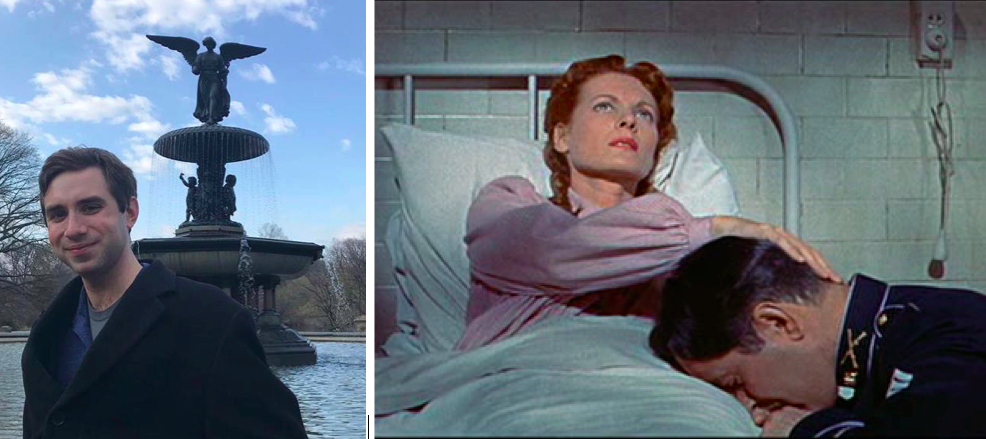
Every guest of The Cinephiliacs has had their chance in the hot seat to be questioned by Peter on a myriad of topics, but never the other way around. In this very special 100th episode, it is the guests who have control of the mic. Friend of the show Keith Uhlich plays host for an episode to ask Peter about his first cinematic memory, how the podcast got started, and why he turned to film history. Along the way, many other former friends call in to ask their own questions about his favorite theaters, the films he just doesn't understand, and the lessons he's learned through the course of the show. Finally, Peter finally chooses the film and goes with John Ford's enigmatic biopic The Long Gray Line, a story of the military and America in a way that neither Keith nor Peter can wrap their heads entirely around, but find themselves in tears at the end nonetheless. Is it shallow patriotism, or is Ford crafting the most mysterious anti-war film ever made?

0:00-4:27  Opening
5:12-1:38:44 Deep Focus — Peter Labuza
1:39:24-1:43:24  Sponsorship Section
1:44:44-2:18:11 Double Exposure — The Long Gray Line (John Ford)
2:18:56-2:24:10 Final Questions / Thanks 
2:24:12-2:25:54 Close

Sunday, November 29, 2015

Episode #71 - Kristin Thompson (How Green Was My Valley)


"You always start with saying, 'What is this film trying to do?'"

If you've taken a film studies course in the last couple decades, you likely came across Film Art on the required book purchases. Chances are you first learned how to investigate the structure of a film (narrative, editing, mise-en-scene, sound, etc) before learning how to recognize ideology, or apply psychoanalytic theories. Wherever one's interest lie in looking at cinema, the work by film scholar Kristin Thompson over the last four decades has provided intensive groundwork into looking at Hollywood cinema's most intuitive principles and beyond. Kristin sits down to traces her entrance into academic film studies and developing a method for understanding form as adapted from Russian theories, the history of classical structure as developed by Hollywood and its legacy both abroad in the silent era and continuing into even today's so-called "VFX-driven" movies, and her work on The Lord of the Rings franchise and its game-changing success in the new century. Finally, the two sit down to look at John Ford's How Green Was My Valley, which employs unique methods of narrative strategy and compositional staging to create a poetic "three-hankie picture" (and well deserving of its 1941 Oscar).

0:00-3:03 Opening
4:21-11:36  Establishing Shots - Manhunter
12:21-58:18 Deep Focus - Kristin Thompson
59:27-1:02:07 Mubi Sponsorship
1:03:49-1:22:27 Double Exposure - How Green Was My Valley (John Ford)
1:22:31-1:24:09 Close


Sunday, July 19, 2015

Episode #62 - Adrian Martin (Gloria)


"The idea is not knowing what you're going to write, and to be open to your unconscious. If you're having a free association, it's because it's actually meaningful."

In an age in with the image friendly world of Twitter and Tumblr has made it all to easy to isolate our favorite shots in cinema, Adrian Martin wants to return us to movement. His new book,  Mise en Scène And Film Style: From Classical Hollywood to New Media Art examines the historical and contemporary uses of the French term to describe how frames can turn in style, tone, and intensity, all without an edit. In this trans-Atlantic recorded interview, Adrian discusses his origins as a cinephile in Australia, how the Internet both gave him a voice and provided new challenges, and his continual search to allow films to speak to him in new ways. Finally, they discuss Gloria, a forgotten work by the legendary John Cassavetes, which takes the filmmakers intensely rhythmic style on to the streets of New York for a gangster thriller with Gena Rowlands.

0:00-2:21 Opening
3:45-8:06  Establishing Shots - Hype Williams's Belly
8:50-1:09:39 Deep Focus - Adrian Martin
1:10:33-1:12:44 Mubi Sponsorship
1:13:31-1:32:00 Double Exposure - Gloria (John Cassavetes)
1:32:05-1:33:45 Close 
Subscription Options


Sunday, September 21, 2014

Episode #46 - Karina Longworth (Wanda)


"One of the things that keeps me excited is figuring out who these people were and where they were in their lives when they were making these things that mean so much to me."

Peter doesn't listen to many other film podcasts, but one of his joys this year has been the transporting mysteries of You Must Remember This, hosted by former LA Weekly critic Karina Longworth. Karina discusses how her interest in writing about Hollywood's golden era brought her from the throes of academic writing to the world of online film writing and finally to her new podcast. The two also discuss her books on the careers on Al Pacino and Meryl Street, and her latest text, Hollywood Frame by Frame, which investigates the ins and outs of contact sheets. Finally, the two examine Barbara Loden's singular feminist triumph, Wanda, and how this tragic film explores the psychology of an "ordinary woman." Plus, an brief on the rarities from this year's CineCon, including films by John Ford and Allan Dwan.

0:00-1:50 Opening
2:45-7:18 Establishing Shots - CineCon
8:04-53:50 Deep Focus - Karina Longworth
57:03-1:10:00 Double Exposure - Wanda (Barbara Loden)
1:10:03-1:11:41 Close

Listen to Karina Longworth on You Must Remember This, and purchase her books Hollywood Frame by Frame, Meryl Streep, Al Pacino, and George Lucas. Read her work on LA Weekly, Grantland, and Slate.
Follow Karina on Twitter here. 
Wanda has been released on DVD, but it is currently out of print.

Sunday, March 30, 2014

Episode #35 - Mark Harris (The Best Years of Our Lives)


"I was interested in the story of these five men who were in Hollywood and established directors, then left, and then came back."

During World War II, five of Hollywood's star directors, whose names had been behind some of the biggest box office hits and Oscar winners, dropped their entire careers to go to war. Their goal was not to fight, but to document. Besides being the only Oscar columnist worth reading, Mark Harris is now the author or Five Came Back: A Story of Hollywood and the Second World War. In this podcast, Mark and Peter sit down to discuss this essential read, examining the relationship between Hollywood and the government, the problem of realism and re-creations, and the pains felt by men who returned to a system that seemed to have forgotten them. Finally, the two discuss William Wyler's The Best Years of Our Lives, a universal drama that has numerous touches of the director's own war experience.

0:00-1:35 Opening 
2:33-8:06 Establishing Shots - William Freidkin's Sorcerer
8:50-1:26:40 Deep Focus - Mark Harris
1:27:53-1:46:58 Double Exposure - The Best Years of Our Lives (William Wyler)
1:47:02-1:48:41 Close

Read Mark Harris on Grantland, New York Magazine, and Entertainment Weekly; purchase Pictures at a Revolution and Five Came Back.
Follow Mark on Twitter.

Sunday, February 23, 2014

Episode #33 - Kent Jones (Spawn of the North)


"There's a general problem with film culture of actually confronting a movie head-on."

Kent Jones is truly one of the most essential voices for Peter. His writings are reflective, intelligent, and complex in a way few writers come close to, and his other work—A Letter To Elia, the World Cinema Project, and the New York Film Festival—are key to Peter's continuing exposure to cinema. So Kent sits down with Peter to discuss his first exposure to cinema, his mentorship under Manny Farber and Martin Scorsese, his complicated process of writing, working on making films and using images, and the auteurs that continue to inspire him. The two then end with a conversation on the rarely seen Spawn of the North, a Henry Hathaway film with Henry Fonda that finds something very physical  in its Alaskan set border town.

0:00-1:20 Opening 
2:47-8:47 Establishing Shots - John Ford's Young Mr. Lincoln / Donations
9:32-1:16:20 Deep Focus - Kent Jones
1:17:28-1:36:48 Double Exposure - Spawn of the North (Henry Hathaway)
1:36:52-1:38:31 Close

Kent Jones's books include Physical Evidence: Selected Film Writings, L'Argent, and Olivier Assayas. His films include Val Lewton: The Man in Shadows and A Letter To Elia. You can often read him in Film Comment.

Wednesday, October 30, 2013

Special Episode - Andrew Sarris Roundtable


"All I can do is point at the specific beauties of interior meaning on the screen and later catalogue the moments of recognition."

It can only be underestimated how much of the ways we perceive and think about cinema today have been defined by Andrew Sarris. The importer of auteur theory from France and the long time champion of some of the greatest film artists who would have been ignored otherwise, Sarris's work in the Village Voice, the academic halls of Columbia, and his canonical book, The American Cinema, represents an invaluable legacy on cinephilia and criticism. Sarris passed away in June of 2012, but with October 31st, 2013 being what would have been his 85th Birthday, Peter is glad to host a round table featuring Dan Sallitt, Godfrey Cheshire, and David Schwartz to discuss the work of an essential critic and lover of movies.

0:00-1:37 Opening 
3:25-57:16 Sarris Roundtable (Part I)
57:49-59:05 Advertisement
1:00:06-1:23:22 Sarris Roundtable (Part II)
1:23:25-1:25:17 Close / Outtake